What If a Crew Became Stranded On Board the Skylab Space Station? (1972)

Image credit: NASA
On 28 July 1973, the Skylab 3 crew of Alan Bean, Jack Lousma, and Owen Garriott lifted off from Launch Pad 39B at Kennedy Space Center, Florida, bound for the Skylab Orbital Workshop in low-Earth orbit. Despite their mission's numerical designation, they were the second crew to visit Skylab; in a move guaranteed to generate confusion for decades to come, NASA had designated as Skylab 1 the unmanned Workshop launched on 14 May 1973, and had dubbed the first crew to visit it Skylab 2.

The Skylab 3 Apollo Command and Service Module (CSM) separated from the S-IVB second stage of its Saturn IB launch vehicle and began maneuvering to catch up with Skylab. During final approach to the Workshop, one of the four steering thruster quads on the CSM began to leak nitrogen tetroxide oxidizer from its forward-firing engine. The crew dutifully shut off the quad and used the three quads remaining to complete docking without further incident.

On 2 August, a second thruster quad began to leak, raising fears that tainted nitrogen tetroxide might have damaged both quads. If this were the case, then the Skylab 3 CSM's remaining two quads and Service Propulsion System (SPS) main engine might also have been compromised; though the individual quads and the SPS had independent plumbing, all contained oxidizer from the same batch. If the leaks continued and spread, moreover, nitrogen tetroxide might contaminate the inside of the CSM's drum-shaped Service Module, potentially damaging other spacecraft systems.

The leaks did not catch NASA off guard. As was common in the 1960s and early 1970s, NASA had considered potential Apollo and Skylab failures - however unlikely - and had planned ahead. Within hours of the second leak, The U.S. civilian space agency put into motion a variant of a plan Kenneth Kleinknecht, Skylab Program Manager, and Lawrence Williams, Apollo Spacecraft Program Office, had described less than a year earlier at the Fifth Annual Space Rescue Symposium in Vienna, Austria.

In their paper, Kleinknecht and Williams explained that Skylab would provide the first true opportunity for space rescue in the U.S. space program. One-seat Mercury and two-seat Gemini spacecraft had been too small and limited in capability to serve as rescue spacecraft. Apollo lunar CSMs were much more capable; even so, they each carried only a little more breathing oxygen, fuel cell reactants, and food than were needed to support a three-man crew for the duration of a lunar mission (about 10 days). If an Apollo CSM had become stranded in lunar orbit – by an SPS failure, say – then its crew would have perished long before NASA could have attempted a rescue.

The Skylab Orbital Workshop. The red arrow points to the Multiple Docking Adapter's radial port. Image credit: NASA
If astronauts needed to evacuate Skylab, they could board their CSM docked at Skylab's front port, undock from the Workshop, and splash down in the ocean in less than a day. If, on the other hand, a crew's CSM became unusable while they lived and worked on board Skylab, then the astronauts could await rescue.

Stranded astronauts were unlikely to run out of supplies. Kleinknecht and Williams noted that the Orbital Workshop would be launched with enough oxygen, food, water, and other supplies on board to support three men for eight months. At the time they presented their paper, NASA planned three three-man Skylab visits lasting 28, 56, and 56 days - that is, a total of a little less than five months.

NASA, meanwhile, would prepare and launch a rescue CSM with a crew of two. Skylab, Kleinknecht and Williams explained, had a second, radial docking port on its Multiple Docking Adapter. The rescue CSM would dock at the radial port to pick up the stranded crew.

They proposed that the CSM intended for the next Skylab crew should become the rescue CSM. This would presumably reduce by one the number of long-duration Skylab missions that could be flown. A fourth CSM, which would serve as the backup CSM throughout the Skylab program, would serve as the rescue CSM for Skylab 4, the third and final planned Skylab crew.

Image credit: NASA
Kleinknecht and Williams estimated that stripping out the rescue CSM's aft bulkhead lockers to make room for a "rescue kit" would require about a day. The rescue kit would include a pair of special astronaut couches, connectors and hoses for linking two additional space-suited astronauts to the rescue CSM's life support and communications systems, and an experiment-return pallet for bringing home a select few of the stranded crew's science results. The rescue CSM's two-man crew would recline in the left and right CSM couches; the three rescued Skylab crewmen would return to Earth in the center couch and in the two special couches mounted below the others in place of the lockers.

The rescue CSM would bring along a special Apollo probe-and-drogue docking unit that would enable astronauts inside Skylab to manually undock and cast off the crippled CSM. This would clear the Workshop's front port for any future CSM dockings. Kleinknecht and Williams did not explain what would happen to the unmanned CSM after it was discarded.

Though the time needed to install the rescue kit was minimal, the time needed to refurbish Pad 39B and prepare the rescue CSM and Saturn IB rocket for launch would depend upon when NASA declared that a rescue was necessary. After each Skylab Saturn IB launch, ground crews would need about 48 days to refurbish Pad 39B and prepare the next Skylab CSM and Saturn IB.

If a rescue were judged to be necessary at the beginning of the 28-day first manned Skylab mission (Skylab 2), then the mission would be extended by 20 days, making the total duration about 48 days. If a rescue were declared to be necessary late in Skylab 2 - say at the time of planned return to Earth - then preparations for the next Skylab CSM launch would be farther along, but would have started later. The rescue CSM and Saturn IB would thus need 28 days before they could lift off, bringing the total Skylab 2 mission duration to about 56 days, or double the duration planned at launch.

Activation of the Skylab rescue capability early in the Skylab 3 or Skylab 4 mission might permit a rescue before the return time planned when the stranded crew left Earth, Kleinknecht and Williams found. A failure near the planned conclusion of Skylab 3 or Skylab 4 would see a rescue CSM launched as little as 10 days after the rescue plan was activated.

Skylab rescue crewmen Vance Brand (left) and Don Lind. Though he never flew to Skylab, Brand would reach space as part of the Apollo-Soyuz Test Project in July 1975 and as Commander of Space Shuttle missions STS-5 (November 1982), STS-41-B (February 1984), and STS-35 (December 1990). Lind would reach space as a Mission Specialist on Shuttle mission STS-51-B (April-May 1985). Image credit: NASA
The 2 August 1973 failure of the second Skylab 3 CSM thruster quad unleashed a storm of activity. NASA prepared the backup Skylab CSM, not the Skylab 4 CSM, as its rescue vehicle, and tapped Skylab 3 backup crewmen Vance Brand and Don Lind to pilot it.

NASA had made other changes to Kleinknecht and Williams' rescue plan. The special probe-and-drogue docking unit for casting off the malfunctioning CSM had become a concave drogue unit that would be installed over the front port. It was launched with Skylab, not in the rescue CSM. After they installed it, the stranded astronauts would "trigger" the drogue to manually release their balky CSM. The rescue CSM would then dock at the front port, not the radial port.

Almost as soon as NASA activated the rescue plan, laboratory analysis on Earth showed that the batch from which the nitrogen tetroxide in the Skylab 3 CSM's propulsion systems had been taken was not tainted. As unlikely as it might seem, the two thruster quad malfunctions lacked a common cause.

Working in the CSM simulator in Houston, astronaut Brand demonstrated that the Skylab 3 crew could maneuver their spacecraft adequately even if they lost a third thruster quad. That is, if they were left with only one functioning quad when time came for them to return home, they could still safely deorbit their CSM.

Though rescue preparations continued as a precaution, by 10 August NASA managers had cleared the Skylab 3 crew for the full duration of their planned 59-day mission on board the Workshop. On 25 September 1973, Bean, Lousma, and Garriot returned to Earth as originally planned, in the CSM that had launched them to Skylab.

Sources

"Skylab Rescue Capability," Kenneth S. Kleinknecht and Lawrence G. Williams; paper presented at the Fifth Annual Space Rescue Symposium Organized by the Space Rescue Studies Committee of the International Academy of Astronautics, 23rd Congress of the International Astronautical Federation, Vienna, Austria, 9-12 October 1972

Skylab News Reference, NASA Office of Public Affairs, March 1973, pp. IV-6 - IV-8

"Skylab: Outpost on the Frontier of Space," T. Canby, National Geographic, October 1974, p. 460

Related Posts

What If Apollo Astronauts Became Marooned in Lunar Orbit? (1968)

What If an Apollo Lunar Module Ran Low on Fuel and Aborted Its Moon Landing? (1966)

What If An Apollo Saturn Rocket Exploded on the Launch Pad? (1965)

What If Apollo Astronauts Could Not Ride the Saturn V Rocket? (1965)

A Symposium on Mendez v. Westminster

We've noted the publication of Philippa Strum's book on Mendez v. Westminster and an exhibit on the litigation in the federal courthouse in San Diego.  Now the transcript of the introductory secession of a symposium on the case is up on SSRN.  It is Mendez v. Westminster: A Living History, Michigan State Law Review 2014: 401-27, with contributions from Judge Frederick P. Aguirre, Kristi L. Bowman, Gonzalo Mendez, Sylvia Mendez, Sandra Robbie, and Philippa Strum:
School desegregation is not just a "black and white" issue, and in fact it never has been. In 1931, a county court in Lemon Grove, California ordered a school district to stop segregating its white and Latino students. Fifteen years later in 1946, a court reached the same result in Mendez v. Westminster, becoming the first federal court to order the desegregation of schools. In this piece, Gonzalo Mendez and Sylvia Mendez (both now retired) recall their experiences as the children whose parents initiated the groundbreaking Mendez litigation, and the way in which their parents remembered the litigation. Sandra Robbie, who wrote and produced the Emmy-award winning documentary about the case, discusses its historical context. Frederick Aguirre, now a judge, reflects on the legal and personal significance of the decision. Philippa Strum, author of a book about the case, considers the unique challenges and rewards of writing about school desegregation cases. Kristi Bowman facilitates these various reflections and weaves them together.

Ginsburg on Papal Printing Privileges as Proto-Property

Who says alliteration is dead?  Jane C. Ginsburg, Columbia Law School has posted Proto-Property in Literary and Artistic Works: Sixteenth-Century Papal Printing Privileges, which is forthcoming in The History of Copyright Law: A Handbook of Contemporary Research, ed.  Isabella Alexander & H. Tomas Gomez-Arostegui (Edward Elgar, 2015):
This Study endeavors to reconstruct the Vatican’s precursor system of copyright, and the author’s place in it, inferred from examination of over five hundred privileges and petitions and related documents — almost all unpublished — in the Vatican Secret Archives. The typical account of the precopyright world of printing privileges, particularly in Venice, France and England, portrays a system primarily designed to promote investment in the material and labor of producing and disseminating books; protecting or rewarding authorship was at most an ancillary objective.

The sixteenth-century Papal privileges found in the Archives, however, prompt some rethinking of that story because the majority of these privileges were awarded to authors, and even where a printer received a privilege for a work of a living author, the petition increasingly asserted the author’s endorsement of the application. The predominance of authors might suggest the conclusion that the Papal privilege system more closely resembled modern copyright than printer-centered systems. That said, it would be inaccurate and anachronistic to claim that authorship supplied the basis for the grant of a Papal privilege. Nonetheless, a sufficient number of petitions and privileges invoke the author’s creativity that one may cautiously suggest that authorship afforded a ground for bestowing exclusive rights.

The Study proceeds as follows: first, a description of the sources consulted and methodology employed; second, an account of the system of Papal printing privileges derived from the petitions for and grants of printing monopolies; third, an examination of the justifications for Papal printing monopolies and the inferences appropriately drawn regarding the role of authors in the Papal privilege system.

Minggu, 30 Agustus 2015

Writing Abortion History

As I end my time on Legal History Blog, there is another issue worth discussing: the challenges of writing the history of an issue as divisive as abortion. Some of the obstacles I faced were practical. Most major archives contain very little on the antiabortion movement. Even promising libraries often did not resemble the ones I expected. I once visited the basement of a convent undergoing construction and was left completely unsupervised. Luckily for the nuns, I had no intention of leaving with boxes of archival material in my bag.

Other challenges were personal. Like many scholars, I had my own opinions about abortion. To a greater extent than I had realized, I often had preconceived ideas about the activists on either side of the struggle. Telling their story fairly and without judgment was not always easy. Conducting oral histories with many activists helped me cut through my own fixed ideas about abortion. 

Finding the language to discuss abortion history in person or in writing could also be difficult. I wanted to talk in a way that would not misrepresent who I was or what I thought, but I also wanted to create a comfortable, nonjudgmental environment for activists already distrustful of anyone asking to talk. In spite of these challenges, hearing activists describe their journeys helped me set aside some of the stereotypes I had relied on. Many of these activists were generous with their time. Some sent me personal papers or recorded oral histories. A few have passed away since I spoke with them and before I could properly thank them for their help. 

Presenting historical work on this subject can be as hard as writing it. Once, in discussing my work on compromise after Roe, one audience member asked me whether it would be good a thing if “we” could compromise with “them.” I was not sure which side of the abortion issue my questioner took, but in discussing a subject that arouses so much passion, I was not surprised that discussion immediately turned from historical to normative questions about abortion. Something similar happened in media reviews. Some only briefly discussed what the book said before moving on to what the law ought to do.

But I think it is the dominance of normative questions about abortion that makes it so important for historians to study the law and politics of reproductive health. Much of this legal history remains to be written.

Sunday Book Roundup

The New Rambler has a review of Natural Law in Court: A History of Legal Theory in Practice by R.H. Helmholtz (Harvard University Press).

Christine Desan's Making Money: Coin, Currency and the Coming of Capitalism (Oxford University Press) is reviewed in The Financial Post (here) and in the Journal of Legal History (here). From JLH:
"Professor Christine Desan is the co-founder of Harvard’s Program on the Study of Capitalism. This is a significant and innovative new development in the teaching and researching of legal, business and economic history. It marks a start of a new wave in the way that we teach and think about the history of capitalism. Here the scholars collectively advocate a move away from the more traditional issues of profitability, efficiency, strategy and effective management, and focus upon issues of power, on the
effects of ways of organizing production, distribution, buying and selling, on society, on policy, and politics. ..."
"In sum, this book is of tremendous value and a notable text in legal history and within those subjects at the peripheries surrounding it. It sets a new path in challenging our ways of studying commercial law and viewing money and currency as a purely economic tool and as a mechanism of exchange."
From H-Net is a review of the volume, Drone Wars: Transforming Conflict, Law, and Policy (Cambridge University Press) edited by Peter Bergen and Daniel Rothenberg.

Also on H-Net is a review of James D. Morrow's Order within Anarchy: The Laws of War as an International Institution (Cambridge University Press).

"With a good nose for the big legal story of the moment, Linda Hirshman — author of “Victory” (2012), a popular account of the gay rights movement — is back, this time with “Sisters in Law,” a joint biography of Ginsburg and Sandra Day O’Connor. Ginsburg is attracting a lot of attention these days, especially from the young and hip (who have emblazoned all manner of dry goods with her likeness and blanketed D.C. with “Can’t Spell Truth Without Ruth” stickers). But it’s not just the Ginsburgian subject matter that makes Hirshman’s book seem so vital. “Sisters in Law” tells the life stories of the nation’s first female justices, but it is as much about how we got to the present juncture with respect to women’s legal rights."

Jumat, 28 Agustus 2015

Weekend Roundup

  • Amici, the podcast series of nycourts.gov, has an interview with Marilyn Marcus, executive director of the Historical Society of the New York Courts.  Among other things, Ms. Marcus discusses Former Chief Judge Judith Kaye's role in founding the Society.
  • The American Lawyer has honored former Georgetown law dean (and FTC chairperson) Robert Pitofsky with its Lifetime Achievement Award
  • Florida International University's press release noting Professor M.C. Mirow's selection to co-direct a graduate student colloquium at October's ASLH meeting is here
  • Speaking of the ASLH, we just got our electronic ballot.  It's a good time for readers who aren't members to join, and for members to reflect on their priorities in choosing board members, including recognizing legal historians who work on times and places other than one's own.
  • Edward J. Balleisen on teaching legal and business history in Duke Magazine. H/t: Brad Snyder
Weekend Roundup is a weekly feature compiled by all the Legal History bloggers. 

    A Forgotten Pioneer of Mars Resource Utilization (1962-1963)

    Sixty-five years ago: the first rocket launch from Cape Canaveral, Florida. A captured German V-2 with an American WAC Corporal sounding rocket on top begins a low-angle flight to a downrange distance of at least 320 kilometers. Image credit: U.S. Army/NASA
    Most Mars expedition plans of the 1950s and early 1960s made little use of martian resources. Apart from using the planet's atmosphere to slow landers for touchdown, either through use of parachutes or, more commonly in the time period, large wings, Mars spacecraft generally depended little on materials or conditions peculiar to Mars. This was because so little was known of the planet.

    The potential benefits of using martian resources to make spacecraft propellants, building materials, and life support consumables were so compelling, however, that some planners chose to incorporate them into their mission designs anyway. Chief among the anticipated benefits was a dramatic reduction in spacecraft mass if raw materials for rocket propellants could be found at Mars. Reducing mission mass meant fewer expensive, temperamental rockets would be needed to launch Mars spacecraft components and propellants into Earth orbit for assembly, which in turn meant reduced mission cost and risk.

    The Working Group on Extraterrestrial Resources (WGER) was formed in early 1962. Besides NASA, the group included representatives from the U.S. Air Force, the U.S. Army, the U.S. Geological Survey, the Bureau of Mines, aerospace corporations, and universities. The group, which met throughout the 1960s, focused mainly on lunar resources. A few researchers, however, used the WGER as a forum for discussing eventual exploitation of Mars resources.

    One of these bold forward-thinkers was Ernst Steinhoff, representing the RAND Corporation, a think tank created in 1946 to provide advice to the U.S. military services. RAND had performed Mars studies for the U. S. Air Force as early as 1960. Steinhoff, whose specialty was rocket guidance, came to the U.S. in 1945 with Wernher von Braun, Ernst Stuhlinger, Krafft Ehricke, and other members of the Peenemünde rocket team.

    After working to launch captured, sometimes modified, V-2 missiles for the U.S. Army - the image at the top of this post shows the 24 July 1950 launch of the two-stage Bumper 8 rocket - Steinhoff went to work for U.S. industry in 1956. He joined RAND in 1961, and was instrumental in the formation of the WGER the following year. In fact, he became the WGER's first chairman.

    Mars pioneer Ernst Steinhoff. Image credit: U.S. Air Force
    Steinhoff summed up his Mars work in papers presented at a March 1962 meeting at NASA's Marshall Space Flight Center in Huntsville, Alabama, and at the pivotal June 1963 American Astronautical Society Symposium on the Manned Exploration of Mars in Denver. George Morgenthaler of Martin Marietta Corporation organized the Denver symposium, the first non-NASA meeting devoted to piloted Mars travel. As many as 800 engineers and scientists heard Steinhoff's paper and 25 others. It was the first time so many science and engineering professionals with an interest in Mars had come together in one place, and the last Mars meeting of its size until the 1980s.

    Near the end of 1963, soon after he chaired the second annual meeting of the WGER (23-25 October 1963), Steinhoff could not pass up an offer to become Chief Scientist at the Air Force Missile Development Center at Holloman Air Force Base in Alamogordo, New Mexico. When he assumed his new responsibilities, his involvement in the WGER and his work on Mars subjects suffered. This is unfortunate, for in his Huntsville and Denver papers he anticipated and promoted mission concepts which would, with the passage of decades, emerge as highly significant in Mars exploration planning. Had he continued his work at RAND, he might have further promoted his ideas, and that might have changed the course of Mars mission planning in the 1960s and beyond.

    Steinhoff's work focused on "autarchic" – that is, self-sufficient – bases on Mars and Phobos. Self-sufficiency would be achieved through mining and processing of local materials, and by equipping the base with regenerable (recycling) life support systems. The Phobos and Mars bases would support scientific research and serve as transportation "terminals" for spacecraft.

    Steinhoff estimated that extraterrestrial water could supply over 90% of the logistical needs of space-faring humans. He wrote that the moon's gravity – nearly 20% as strong as Earth's – would make it an inefficient "interim space base" for fueling Mars-bound ships. Citing Clyde Tombaugh, who had written that Mars's moons were probably made of the same water-rich materials as Mars itself, Steinhoff proposed that Phobos supplant the moon as a stepping stone to Mars. Nuclear systems could cook water out of Phobos rocks, then split it into hydrogen and oxygen chemical rocket propellants.

    Image of Mars captured at Mt. Wilson Observatory in 1956, the year of the last close Mars opposition at the time Steinhoff wrote his papers. Because Mars has a decidedly elliptical orbit, the Earth-Mars distance during oppositions varies over a roughly 15-year cycle. The next close opposition would occur in 1971; the next after that was in 1988; and the most recent took place in 2003. Another will take place in 2018. When Steinhoff speculated on the nature of martian resources, this was among the best images of Mars available. Image credit: Mt. Wilson Observatory/NASA
    Steinhoff's early Mars expedition would include 18 astronauts and a convoy of three crew and six cargo spacecraft. They would use a conjunction-class Mars mission profile, traveling to Mars in 256 days, remaining in the Mars system for 485 days, and then returning to Earth in 256 days.

    Two chemists and two geologists would prospect on Phobos for water-rich rocks. The little moon's weak gravity would enable space-suited astronauts to easily assemble "ready-to-operate" base modules shipped from Earth. Space construction workers, Steinhoff wrote, would be able to carry and connect 50-ton modules by hand. (Steinhoff apparently forgot that weightless objects retain their mass. Astronauts can move massive objects, it is true, but only through considerable exertion, and only if they have a firm footing and adequate handholds. Stopping a massive object in weightlessness requires as much effort as setting it in motion.)

    Reusable winged three-man shuttles based at the Phobos terminal would provide access to Mars's surface. In common with most Mars planners of his day, Steinhoff assumed, based on the consensus view of Earth-based astronomers, that the martian atmosphere would be about 10% as dense as Earth's - that is, thick enough to support gliding shuttles requiring minimal landing propellants.

    Mars's surface would be rough, Steinhoff expected, so the first gliding shuttle landing would be a difficult proposition. He proposed that early shuttles should parachute drop cargo and astronauts, then blast back to Mars orbit without landing. Among the early air-dropped cargoes would be a radio-controlled bulldozer, which astronauts on Phobos would remote-control to build a smooth, level runway for the first Mars shuttle landing. This was probably the first time anyone proposed to teleoperate equipment on Mars from orbit.

    The runway would be built within 25º of the martian equator so that it could be reached with relative ease from Phobos' equatorial orbit. The first Mars surface base would be established near the runway. Inflatable modules would provide living space for early explorers. After the Mars base became operational, shuttles would rely on propellants manufactured from Mars water to return to the Phobos base.

    The Mars base would use vehicles and building techniques that Steinhoff's RAND colleagues had proposed in their Air Force studies. Rocket turbine engines tailored to the martian atmosphere - which many expected would be made mostly of nitrogen, as is Earth's atmosphere - would power surface rovers, airplanes, and helicopters with low-mass inflatable parts. Astronauts would manufacture cement from martian materials, construct masonry and cinder-block buildings, and inhabit martian caves.

    After the propellant needs of the Mars system were met, Phobos would become a fueling station for interplanetary spacecraft. Steinhoff estimated that enough propellant could be manufactured in just 100 days to launch a spacecraft from Phobos to 300-mile-high Earth orbit, and that Phobos propellants could cut the time required for transfer between Mars and Earth in half.

    He added that "use of indigenous resources, combined with more advanced nuclear ferry systems, may . . . pave the way to intensive interplanetary exploration within the limitations of our national resources." Phobos could, for example, serve as a refueling stop for Jupiter-bound piloted spacecraft.

    Sources

    "Powerplants for Atmospheric and Surface Vehicles on Mars," Research Memorandum RM-2529, W. H. Krase, The RAND Corporation, 10 April 1960

    "Vehicles for Exploration on Mars," Research Memorandum RM-2539, T. F. Cartaino, The Rand Corporation, 30 April 1960

    "A Possible Approach to Scientific Exploration of the Planet Mars," Paper #38, Ernst A. Steinhoff, editor, From Peenemünde to Outer Space, "A Volume of Papers Commemorating the Fiftieth Birthday of Wernher von Braun," NASA Marshall Space Flight Center Technical Report, 1962, pp. 803-836

    "Use of Extraterrestrial Resources for Mars Basing," Ernst A. Steinhoff, Exploration of Mars, George Morgenthaler, editor, pp. 468-500; proceedings of the American Astronautical Society Symposium on the Exploration of Mars, Denver, Colorado, 6-7 June 1963

    "Manned Exploration of Mars?" Raymond Watts, Sky & Telescope, August 1963, pp. 63-67, 84

    Report of the Second Annual Meeting of the Working Group on Extraterrestrial Resources on October 23-25, 1963, at the Air Force Missile Development Center, Holloman Air Force Base, Alamogordo, New Mexico, MDC-TR-63-7, no date (1965?)

    Related Posts

    Clyde Tombaugh's Vision of Mars (1959)

    EMPIRE Building: Ford Aeronutronic's 1962 Plan for Piloted Mars/Venus Flybys

    The Challenge of the Planets: Part One - Ports of Call

    Triangle Legal History Seminar, 2015-16

    Via Al Brophy over at the Faculty Lounge, we have the schedule for the Triangle Legal History Seminar for 2015-16.  Al writes that the seminar meets at the National Humanities Center, except on December 4, when it will meet at UNC Law School.   Except for October 1, the seminar begins at 4 pm.
    Sean Vanatta, Princeton University, September 25

    Wilfred Prest, University of Adelaide, October 1

    Ryan Poe, Duke University, November 6

    Richard Paschal, George Mason University,  December 4

    Renzo Honores, High Point University, January 15

    James Campbell, Stanford University, February 12

    Ashley Elrod, Duke University, March 4
    Anna K. Johns, Duke University, March 25

    Matt Sommer, Stanford University, April 22

    Price on "Health Security" and Mentally Ill Immmigrants

    Polly J. Price, Emory University School of Law, has posted Infecting the Body Politic: Observations on Health Security and the 'Undesirable' Immigrant, which will appear in the Kansas Law Review 63 (2015): 917-52:
    Sovereign nations may refuse admission to migrants who are either physically or mentally ill or disabled. Nations have commonly preferred an ideal class — the physically and mentally healthy — to the “undesirable” migrant who is unhealthy or disabled. Both exclusions are traditionally justified as a nation’s prerogative to choose its membership. Nations defend exclusionary safeguards by the need to protect their citizens against contagions from the outside world. Immigrants who are physically or mentally disabled do not pose the same threat, but they may require state services and support, what U.S. immigration law terms a “public charge.” Mental illness is a different category altogether, in that public safety may be an issue, in addition to the need for state welfare expenditures.

    Mental disorder as a disqualification for entering the U.S., and accordingly disqualification for U.S. citizenship, has a long history. On two notable occasions in the past, Congress has focused specifically on mental health of would-be immigrants — the first decade of twentieth century, and again in the early 1950s. At the same time, state officials desired to rid themselves of “undesirable” non-citizens housed in state institutions. The solution was to collaborate with the federal government to deport them on mental health grounds. In 1926, for example, 796 persons were deported for “insanity” or “epilepsy,” 257 for “other mental conditions,” and 887 as “likely to become a public charge,” out of nearly 11,000 total deportations that year.

    With established interests to protect, the United States along with every other nation imposes constraints on citizenship and migration by self-selection. The screen of “health security” is used to cover policy choices — whether to assume the risk of successfully managing contagious disease; whether to assume the burden of managing mental illness — that have shaped immigration policy for more than a century. The foremost difference is that contagious disease presents a verifiable condition, where mental illness has been defined in such hazy terms as to be applicable to just about anyone — or at least, as Justice Douglas argued, anyone “unpopular.”

    More on the History of the Carceral State

    We previously noted the JAH's special issue on the history of carceral state.  That issue is now freely available on line.  Also, the contributors have a series of posts on the OAH's blog Process, which you may access through pointers on OUPblog.

    Three contributors to the symposium will give a congressional briefing under the auspices of the National History Centeron October 9, from 1-2, in Room 2226 of the Rayburn Building: Alex Lichenstein, Indiana University; Khalil Gibran Muhammad, Schomburg Center; and Heather Ann Thompson, University of Michigan.

    Kamis, 27 Agustus 2015

    Compromise and Marital-Status Discrimination

    At the heart of After Roe is a story about when and why conflict about abortion and gender escalated. Before writing the book, I believed that the Roe decision itself inevitably led to the culture wars we face now. As Gene Burns, Linda Greenhouse, and Reva Siegel have shown, compromise on the abortion issue itself seemed impossible well before the Court intervened. By raising the salience of the abortion issue, however, the Court drew attention to a question that hopelessly divided Americans. In responding to Roe, the antiabortion movement got bigger and more sophisticated. As historian Daniel K. Williams argues in a forthcoming book, abortion opponents also responded to the decision by prioritizing a constitutional amendment. Movement members ended up supporting whichever political party endorsed their constitutional agenda. When Ronald Reagan made the Republican Party the “party of life,” he strengthened an alliance between pro-lifers and the political Right.

    Just the same, as I document in After Roe, the Court’s 1973 decision did not immediately or inevitably eliminate compromises on other important gender issues. Indeed, in the decade after Roe, influential activists on either side of the debate viewed common-ground solutions as more important than ever, particularly on the issues of pregnancy discrimination, welfare for adolescent mothers, and even the regulation of fetal research. I argue that the polarization of these issues came later and for reasons beyond the Court’s decision, including the rise of the New Right and Religious Right and political party realignment.
             
    The book left me wondering about other areas of possible cooperation. At times in the 1970s, some pro-lifers pushed for laws banning marital-status discrimination, particularly at the local and state level. For certain movement leaders, these laws promised to reduce abortion rates by removing the stigma of illegitimacy and unwed motherhood. In the same period, as part of the early push for civil-rights ordinances, gay, lesbian, bisexual, and transgender activists also called for bans on discrimination on the basis of both sexual preference and marital status. For these advocates, ending marital-status discrimination would protect gays and lesbians who could not marry while undermining the legitimacy of state regulation of sexuality more broadly.
             
    Agreeing with gay, lesbian, bisexual, or transgender activists would, I imagine, have exposed another fault line in the antiabortion movement. Some movement members saw sexual irresponsibility, not abortion, as the core problem in American society. While praising marital, procreative sexuality, others argued against laws that punished what they considered transgressive sex, seeing these regulations as harmful to children and mothers and coercive of abortion.

    Serena Mayeri’s forthcoming work on the rise of marital supremacy in the 1970s will illuminate an important part of the story about challenges to the sexual status quo in the decade after Roe. A surprisingly diverse group of activists called for protection of the non-marital family. In order to understand the consequences and history of the marriage equality struggle, we should turn our attention to the legal history of that effort and its ultimate decline.

    Laura Edwards’s Civil War Stories

    Duke Today has a lovely on-line feature article, complete with embedded videos, entitled Laura Edwards’ Civil War Stories, prompted by the appearance of Professor Edwards's Legal History of the Civil War and Reconstruction: A Nation of Rights (Cambridge University Press, 2015).

    Michigan's Legal History Workshop, Fall 2015

    Here’s the Fall 2005 lineup for the Legal History Workshop jointly sponsored by the University of Michigan Law School and University of Michigan Department of History.  Sessions meet in 0220 South Hall (Law School) unless otherwise noted.  Guests can obtain the readings via email from Dara Faris (dfaris@umich.edu.)

    September 9. (Wednesday.)  C
    laire Lemercier. CNRS and Sciences Po (Paris.)
    "How do Businessmen Like Their Courts? Evidence from Mid-19th Century France,     England, and New York City."  Special Session Co-Sponsored by the Law & Economics Workshop.  OTE: This session held in Hutchins Hall Room 132.

    September 22.   Eric Foner. Columbia University.
    Gateway to Freedom: The Hidden History of the Underground Railroad. With guest     commentator, Tiya Miles, University of Michigan.

    September 29. Sara Mayeux. University of Pennsylvania Law School.
    "The ‘Progressive' Public Defender (and Its Alternatives) in Los Angeles, 1914-1949"

    October 6. Rebecca J. Scott. University of Michigan.
    "'Acts of Ownership and Authority': The Enslavement of Eulalie Oliveau"

    October 13. Tom Romero. Strum College of Law, University of Denver.
    "Water, Water Everywhere…and No Where: Bridging the Confluence of Water and     Immigration Law"

    October 27. Charlotte Walker-Said. John Jay College, CUNY.
    "Faith, Power, and Family: Law and Christianity in Interwar Cameroon"

    November 3.  Kunal Parker. University of Miami School of Law.
    "Making Foreigners: Immigration and Citizenship Law in America"

    November 17.  Amanda Alexander. University of Michigan.
    "'The Authorities Cannot Meet Demand': Prison Labor, Pass Laws, and Agricultural     Development in Apartheid South Africa"

    November 24.  H. Timothy Lovelace, Indiana University Mauer School of Law.
    "The World is on Our Side:  The U.S. Origins of the United Nation's Race Convention"

    December 3 (Thursday.)  Tomiko Brown-Nagin, Harvard Law School.
    "The Honorable Constance Baker Motley: The Honor and Burden of Being First"
     NOTE: Location is Hutchins Hall room 236.

    Harder and Patten, "Patriation and Its Consequences: Constitution Making in Canada"

    New from the University of British Columbia Press: Patriation and Its Consequences: Constitution Making in Canada (June 2015), by Lois Harder (University of Alberta) and Steven Patten (University of Alberta). A description from the Press:
    Few moments in Canadian history are as intriguing as the "patriation" of Canada’s constitution from Britain. Over the years, the tale of the political battle between Prime Minister Pierre Trudeau and the "Gang of Eight" provincial premiers opposing his patriation plans has developed mythical status. Constitutional lore suggests Canadians would not have a patriated constitution or entrenched the Charter of Rights and Freedoms if not for some last-minute negotiations that took place in a hotel kitchen the night of 4 November 1981 – a night Quebec Premier René Lévesque famously described as the "Night of the Long Knives," when his seven provincial allies deserted him.

    In an effort to look beyond this familiar narrative, Patriation and Its Consequences: Constitution Making in Canada revisits these negotiations and the personalities, visions, and struggles that shaped the resulting constitutional agreement. Offering fresh perspectives on the politics of this key moment in Canadian history, it focuses on the players behind the patriation process, including First Nations and feminist activists, who helped shape Canada’s new constitution.

    The volume also examines the long shadow of patriation, including the alienation of Quebec, the character of Canadian federalism, Indigenous constitutionalism and Aboriginal treaty rights, and the struggle to ensure gender equality rights in Canada. 
    More information, including the TOC, is available here.

    RFP: A History of the US Court of Appeals for Veterans Claims

    [We have the following Request for Proposals for a "book on the history of the creation and the first 25 years of the U.S. Court of Appeals for Veterans Claims."]

    Content.  The U.S. Court of Appeals for Veterans Claims (USCAVC) seeks proposals for a scholarly book on the history of the creation and the first 25 years of the Court. If the Court determines to publish such a book, the book will describe judicial review of veterans appeals and the effect of the Court upon veterans' benefits and the Department of Veterans Affairs (VA) claims and appeals process. Possible topics could include:

    · Efforts of veterans and organizations to obtain judicial review of veterans benefits decisions
    · Legislative history and the process involved in the creation of the Court
    · The Early Phase of the Court's History, including
    · Interviews with original judges
    · Creating a new body of law
    · Administrative challenges in establishing a new court
    · Later Phases of Court history, including significant events since inception
    · Gardner v. Brown-first USCAVC decision subject of Supreme Court review
    · The effect of the Veterans Claims Assistance Act on the Court
    · The second wave of new judges
    · Establishment of USCAVC Bar Association
    · Temporary expansion of Court to nine judges
    · Unique features of the Court and their impact
    · Single-judge decision authority
    · Representation of veterans by non-attorney practitioners
    · Appellate review by an intermediate appellate court
    · Court's place in the veterans appellate structure
    · Significant decisions of the Court

    Sources will include published records of the Court, other published accounts (such as journal articles, Congressional legislative records, and VA records), statistics, and oral histories.

    Format.  The book will be a hard cover illustrated history of approximately 100-200 pages in length not including the table of contents, index and appendices. The book size is expected to be 6.75" x 10".

    Terms of Service.  The Court will pay reasonable author's fees plus expenses.  The Court will not pay any fees incurred for the preparation of any bidder's response to this Request for Proposals.  There will be a series of deadlines for deliverables and drafts to the Court for review, with the ultimate time for the author(s) to complete the draft to be approximately one year from the signing of a contract.

    Rights to the Work.  The Court will retain exclusive right to publish the materials. The author will be provided a specified number of copies for personal use and not for resale.

    Selection Criteria. Selection is at the sole discretion of the Court but if a selection is made, it will be made based upon the Best Value.  Factors considered will include:
    · author's proposed approach to the book, suggested deadlines, schedule, and budget
    · author's overall experience
    · quality of author's past publications
    · author's familiarity with subject matter
    · author's fee and estimated expenses

    Selection and any resulting contract will be in compliance with the Court's procurement policy and all applicable federal laws. Award of a contract is contingent on the absence of, or the absence of appearance of, any conflicts of interest, as determined by the Court, between the bidder and the Court.

    Proposals and Deadline.  All proposals should include the following:
     · a curriculum vitae for each author
    · a 1,000-1,500 word description of the proposed approach to the book
    · complete contact information for each author
    · suggested deadlines and schedule for deliverables
    · suggested budget to include fees and expenses
    · two references

    Deadline for the submission of proposals is November 30, 2015.  Proposals should be sent as email attachments to:

    Gregory O. Block
    Clerk of the Court
    United States Court of Appeals for Veterans Claims
    625 Indiana Avenue, NW, Suite 900
    Washington, D.C. 20004
    Email: contracting@uscourts.cavc.gov

    Questions.  Questions should be directed to the Clerk of the Court care of the email address noted above.  Answers to questions will be sent by reply email, and all questions and answers submitted will be published for review on our Court website under "Employment" via the link titled "Court History Book Request for Proposals Q&A Summary."

    Eaton on Spectral Evidence at Salem, 1692

    Matteson's "Trial of George Jacobs" (LC)
    Rebecca Eaton has posted her LL.B honors paper at the Victoria University of Wellington, written in 2013, The Legitimacy of Spectral Evidence During the Salem Witchcraft Trials:
    This paper looks at the use of spectral evidence during the Salem witch trials and examines whether its use was legitimate and in accordance with the evidential standards of the time (1692). Ultimately this paper finds that the use of spectral evidence was legitimate as it followed the slim guidelines available at the time. The court followed a strong precedent and the limited statutory guidance and instructions that were available. However there was acknowledgement at the time that spectral evidence was limiting the rights of those accused and was leading to unjust convictions. As such these trials invoked an acknowledgement of more modern standards of evidence. Therefore spectral evidence was legitimately used given the guidelines of the time despite the unjust effect that it had.

    Rabu, 26 Agustus 2015

    Cohen on Judge Ginsburg's Seg Academy Case

    My Georgetown Law colleague Stephen B. Cohen has posted “Seg Academies,” Taxes, and Judge Ginsburg, which is forthcoming in The Legacy of Ruth Bader Ginsburg, ed. Scott Dodson (Cambridge University Press, 2015):
    This essay recounts the historical, political, and legal context in which Judge Ginsburg’s ruling in the Wright case arose. This context explains the importance of her decision to the battle against segregated education and highlights as well the repeated efforts of powerful political forces, including the Reagan administration and congressional conservatives, to cripple efforts to prohibit racially discriminatory private schools from receiving federal subsidies through the tax system. This essay also aims to highlight Wright’s place in the modern doctrine of educational discrimination.
    Cambridge writes of the collection:
    Ruth Bader Ginsburg is a legal icon. In more than four decades as a lawyer, professor, appellate judge, and associate justice of the U.S. Supreme Court, Ginsburg has influenced the law and society in real and permanent ways. This book chronicles and evaluates the remarkable achievements Ruth Bader Ginsburg has made over the past half century. Including chapters written by prominent court watchers and leading scholars from law, political science, and history, it offers diverse perspectives on an array of doctrinal areas and on different time periods in Ginsburg's career. Together, these perspectives document the impressive legacy of one of the most important figures in modern law.
     The TOC is here.

    Age of Lawyers: The Roots of American Law in Shakespeare's Britain

    Paster Reading Room (credit)
    We have the following announcement of a new (and free) exhibit at the Folger, Age of Lawyers: The Roots of American Law in Shakespeare's Britain.  The curator is the Folger’s Caroline Duroselle-Melish.  The Academic Advisor is Erin Kidwell of the Georgetown Law Library.  (Georgetown is loaning Sir Edward Coke’s annotated copy of Bracton.)  The exhibit runs September 12, 2015 through January 3, 2016, so plan on viewing it when you’re in town for the ASLH meeting a few blocks away.  The exhibit is in memory of Dr. Christopher Brooks (1948–2014).
    In the 800th anniversary year of the Magna Carta, Age of Lawyers will offer a close-up look at the rapid increase of lawyers and legal actions in Shakespeare's Britain, from the law's impact on daily life to major political and legal disputes—some invoking the Magna Carta—that still influence American politics and government.

    Age of Lawyers will give visitors the chance to explore many of the Folger legal manuscripts on display in further depth through newly digitized images and translated transcripts produced by a current Folger project, Early Modern Manuscripts Online (EMMO).

    Porter, "Their Lives, Their Wills: Women in the Borderlands, 1750–1846"

    New from Texas Tech University Press: Their Lives, Their Wills: Women in the Borderlands, 1750–1846, by Amy M. Porter (Texas A&M University). A description from the Press:
    In 1815, in the Spanish settlement of San Antonio de Béxar, a dying widow named María Concepción de Estrada recorded her last will and testament. Estrada used her will to record her debts and credits, specify her property, leave her belongings to her children, make requests for her funeral arrangements, and secure her religious salvation.

    Wills like Estrada’s reveal much about women’s lives in the late Spanish and Mexican colonial communities of Santa Fe, El Paso, San Antonio, Saltillo, and San Esteban de Nueva Tlaxcala in present-day northern Mexico. Using last wills and testaments as main sources, Amy M. Porter explores the ways in which these documents reveal details about religion, family, economics, and material culture. In addition, the wills speak loudly to the difficulties of frontier life, in which widowhood and child mortality were commonplace. Most importantly, information in the wills helps to explain the workings of the patriarchal system of Spanish and Mexican borderland communities, showing that gender role divisions were fluid in some respects. Supplemented by censuses, inventories, court cases, and travelers’ accounts, women’s wills paint a more complete picture of life in the borderlands than the previously male-dominated historiography of the region.
    More information is available here.

    Selasa, 25 Agustus 2015

    Soucek on the Cold War and the 1965 Immigration Act

    Brian Soucek, University of California, Davis School of Law, has posted The Last Preference: Refugees and the 1965 Immigration Act which is forthcoming in The Immigration and Nationality Act of 1965: Legislating a New America, ed. Gabriel J. Chin and Rose Cuison Villazor (2015):
    The 1965 Immigration Act is remembered — and celebrated — for having replaced an immigration system driven by national origins with a preference system privileging family ties and occupational skills. But while the rest of the 1965 Act, in President Johnson’s words, welcomed immigrants “because of what they are, and not because of the land from which they sprung,” the last of its preferences, given to refugees, emphatically did not. Not only did the 1965 Act fail to embrace the 1951 U.N. Refugee Convention’s protection for refugees persecuted because of their nationality, the Act itself discriminated on the basis of refugees’ nationality. To qualify, those persecuted had to hail from a “Communist or Communist-dominated country” or “the general area of the Middle East.” A separate provision allowed for entry of those “uprooted by catastrophic natural calamity as defined by the President.” By tying refugees’ status to “the land from which they sprung,” to America’s anti-Communist foreign policy and national security interests, and, importantly, to the discretion of the President, the 1965 Act’s refugee provision suggests a counter-narrative to descriptions of the Act as part the domestic anti-discrimination agenda of the mid-1960s, or as a reassertion of Congressional control over immigration. The 1965 Act turned refugee policy into another weapon of the Cold War, to be deployed largely as the President chose. It would be another fifteen years before Congress again attempted (or at least purported) to do for refugees what the 1965 Act did for most other immigrants: end national origin discrimination and formalize the criteria and procedures governing admission to the United States.
    Btw, Cambridge says of Chin and Villazor's collection, due out in October:
    Along with the civil rights and voting rights acts, the Immigration and Nationality Act of 1965 is one of the most important bills of the civil rights era. The Act's political, legal, and demographic impact continues to be felt, yet its legacy is controversial. The 1965 Act was groundbreaking in eliminating the white America immigration policy in place since 1790, ending Asian exclusion, and limiting discrimination against Eastern European Catholics and Jews. At the same time, the Act discriminated against gay men and lesbians, tied refugee status to Cold War political interests, and shattered traditional patterns of Mexican migration, setting the stage for current immigration politics. Drawing from studies in law, political science, anthropology, and economics, this book will be an essential tool for any scholar or student interested in immigration law.

    Priceless treasure hoard found in 1st century grave of Sarmatian woman in Russia

    Priceless treasure hoard found in 1st century grave of Sarmatian woman in Russia | Ancient Origins


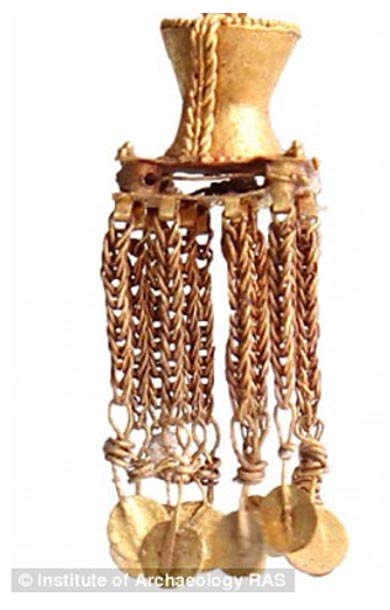
    Archaeologists doing exploratory digging for an airport in Russia have found the grave of an apparent noblewoman with very valuable items, including a sword and knives, gold and silver jewelry, elaborately decorated clothing, a bronze mirror and a decorated bronze bucket. The 1st century AD grave is of the Sarmatian people, whose women are believed to have inspired Greek accounts of the warrior-women Amazons.


    “It is interesting that there are two burials in this mound,” archaeologist Roman Mimokhod told the Mail the Russian Academy of Science's Institute of Archaeology. “One obviously belonged to a man and was totally looted. We found only some fragments of crockery and scattered bones. We will check the bones, but we are almost sure it was some noble man. The second burial belonged to the woman. We believe that it was a double burial of some noble Sarmatian and his wife.”

    He said the discovery of the arrowheads is indirect confirmation of ancient historians' relating that Sarmatian women were involved in hostilities and battle. In addition, there was a harness, indicating she may have been a horse rider.

    The war-hungry women written out of photographic history

    The war-hungry women written out of photographic history


    Lee Miller was famous for her shots of the second world war, but there were many other women in the line of fire whose photographs have faded into obscurity: meet Gerda Taro, Catherine Leroy and Françoise Demulder


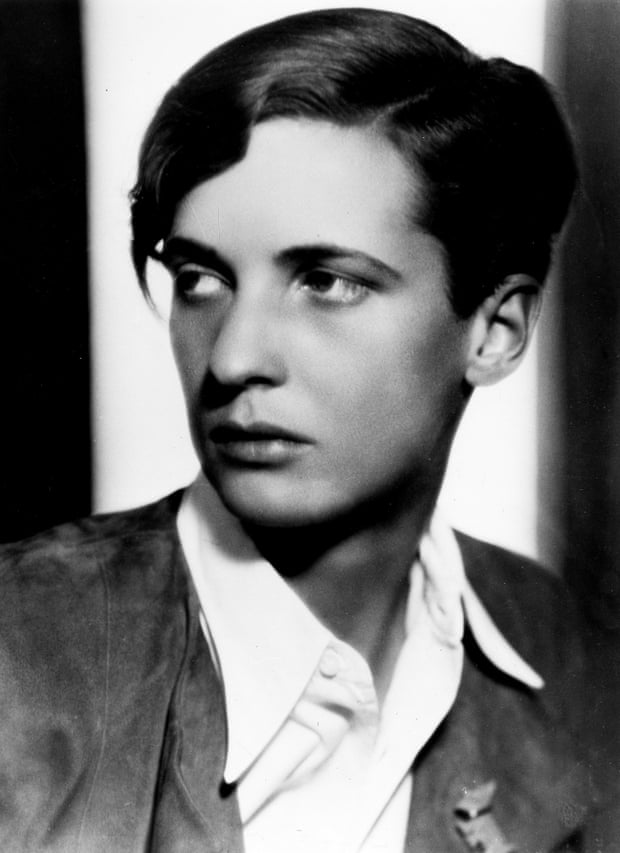
    My new novel has a fictional woman photographer as its protagonist (Amory Clay, 1908-83), one whose working life occupies a large swath of the 20th century and, in the course of my research into the profession, I uncovered what seemed to me like a forgotten sorority of female photographers. In the first half of the last century such photographers were legion – they flourished and happily made their living and reputation alongside their male counterparts, and it was something of a revelation to discover these names and look at the images they made. I say “forgotten”, but no doubt if you’re a curator or a historian of photography or a specialist in the development of the art form then the names of these female photographers will be familiar – but they weren’t to me and, as I looked and read and dug deeper into their world, I became more and more astonished at the work I discovered.

    William Boyd’s new novel, Sweet Caress, is published on 27 August.


    9 Pioneering Feminists In History Who Were Way Before Their Time

    It's spectacularly tricky to attach the label of "feminist" to women who were writing, working, and living far before the term became widely used. And I'm talking centuries before. We're all pretty familiar these days with the shortest working definition of a modern feminist, thanks to writer Chimamanda Ngozi Adichie (and Beyonce) — "a person who believes in the social, economic and political equality of the sexes" — but putting that label onto people from a pre-feminist period (i.e. before the "first wave" of the late 19th century) is pretty challenging. Why? One, they're not self-defining as feminists because that didn't exist yet; two, they often champion certain bits of feminist thought while repudiating others; and three, they come from radically different societies than our own.  Instead, most historians of feminism use the term "proto-feminists," meaning that these women anticipated the movement (some by nearly half a millennium), but can't be safely seen as part of it.

    Stanford historian says falsified medieval history helped create feminism

    Stanford historian says falsified medieval history helped create feminism

    A scholar of the Italian Renaissance, Findlen has collected biographies of medieval women, written in Italy from the 15th to 18th centuries, several centuries after the women lived.

    Through a close examination of these texts, Findlen found that these early modern writers were so passionate about medieval women that they sometimes fabricated stories about them.

    As Findlen carefully tracked down the claims in these stories, she found they varied from factual to somewhat factual to entirely false.

    These invented women were often mentioned in regional histories, with imaginary connections to important institutions. They were described as having law degrees or professorships, claims that turned out to be fictitious.

    Did Jesus Have a Wife? New Tests on Ancient Coptic Papyrus May Give Answers | Ancient Origins

    Did Jesus Have a Wife? New Tests on Ancient Coptic Papyrus May Give Answers | Ancient Origins

    The controversial “Gospel of Jesus’s Wife” has been undergoing rigorous forensic testing and academic analysis to determine if the fragment of papyrus is authentic or not. The much-debated gospel, if legitimate, might show that at one point it was believed Jesus had taken wife, contrary to the current doctrines of Christianity.

    The faded papyrus was revealed by Harvard University professor Karen L. King in 2012 and it instantly made international headlines. The announcement of a papyrus which might alter the historical record of Christian faith was met with elation, anger, and skepticism.

    The fragment, now known as “The Gospel of Jesus’s Wife” is written in Coptic (an Egyptian language), mentions a woman named Mary, and contains the translated phrases, “Jesus said to them, my wife….", and "she will be able to be my disciple,” which suggests not only that Jesus may have married (some believe to Mary Magdalene) but also it raises the argument for women to become ordained priests.

    Senin, 24 Agustus 2015

    The Archaeology News Network: Two Bronze Age female skeletons unearthed at Oylum Mound

    Two 3,900-year-old female skeletons from the Bronze Age have been unearthed at Oylum Mound in the southeastern Turkish province of Kilis.

    Oylum is located three kilometers away from the Syrian border and is one of the largest mounds in the southeastern Anatolian region in terms of its size. Excavations have been carried out by a team from the Cumhuriyet University Archaeology Department.

    Studies in the History of Tax Law

    We’ve been noting the posting of abstracts for chapters in volume 7 of Studies in the History of Tax Law, edited by Peter Harris and Dominic de Cogan, which is forthcoming from Hart.  The editors say of the collection:
    These are the papers from the 2014 Cambridge Tax Law History Conference revised and reviewed for publication. The papers fall within six basic themes. Two papers focus on colonialism and empire dealing with early taxation in colonial New Zealand and New South Wales. Two papers deal with fiscal federalism; one on Australia in the first half of the twentieth century and the other with salt tax in China. Another two papers are international in character; one considers development of the first Australia-United States tax treaty and the other development of the first League of Nations model tax treaties. Four papers focus on UK income tax; one on capital gains, another on retention at source, a third on the use of finance bills and the fourth on establishment of the Board of Referees. Three papers deal with tax and status; one with the tax profession, another with the medical profession and a third with aristocrats. The final three papers deal with tax theorists, one with David Hume, another with the scholarship of John Tiley and a final paper on the tax state in the global era.
    One chapter is Customs Revenue in the British Colony of New South Wales 1827-1859. And Inquiries Concerning Frederick Garling, Artist and Customs Department Employee, by Diane Kraal, Monash University:
    Customs duties in the British Colony of New South Wales provided important funds for the economic development of the settlement. This significant source of revenue led to the Colony's Customs Department being established, in Sydney 1827, to administer the collection process. The shift from physical assessments of duty by powerful individuals to a process with legislated and more regulated procedures was not without challenges. The first aim of this chapter is to provide insights into five early inquiries concerning the system of the Colony's customs duties, legislation and practice. With a particular focus on the last two inquiries, it is asked whether any modifications were made to legislation and practice. The second aim is to provide a fuller account of the employment of Frederick Garling (1806-1873) with the Customs Department, Sydney. He was found guilty of serious neglect of duty by the NSW Board of Inquiry of 1858/59. Today, Garling is a recognised Australian colonial artist for his genre of marine watercolours.
    Another is A Historical Account of Taxes on Goods and Services in the Transition to Post-Socialist China, by Yan Xu, Chinese University of Hong Kong:
    The taxes on goods and services, subject to a very brief interruption, have been separately applied since their inception in early times in modern China. Until now, the Value Added Tax (VAT) is still an incomplete tax as the tax on goods is separate from the tax on services according to the basic legislation, although the two taxes are moving towards an integrated system. The adoption of bifurcated taxes on goods and services has caused a number of problems for the economy and businesses. The question is why the government did not choose a normal VAT system in the first instance if the separation is inefficient. This chapter addresses the question by way of an examination of the historical development of the system of taxes on goods and services in modern China and argues that the design of the system was historically constrained by a number of factors including economic foundations, the level of tax administration and inter-governmental fiscal relations.

    What If Apollo Astronauts Could Not Ride the Saturn V Rocket? (1965)

    Image credit: NASA
    George Mueller left private industry to become NASA's new Associate Administrator for Manned Space Flight in September 1963. He immediately asked John Disher and Adelbert Tischler, two veteran NASA engineers not directly involved in Apollo, for an independent assessment of the moon program. On 28 September, they told Mueller that it could not achieve President Kennedy's goal of a man on the moon by 1970. They estimated that NASA might be able to carry out its first manned moon landing in late 1971.

    Mueller took drastic action. When he joined NASA, the Apollo flight-test plan was based on the philosophy of incremental testing, which meant that untried rocket stages would launch only dummy stages and dummy spacecraft. On 29 October 1963, Mueller informed his senior managers that Apollo test flights would henceforth use complete systems. Mueller's directive meant that, when the Saturn V S-IC first stage flew for the first time, it would be as part of a complete 363-foot-tall three-stage Saturn V. The new "all-up" approach would, it was hoped, slash the number of test flights needed before the Saturn V could launch astronauts to the moon.

    George Mueller. Image credit: NASA
    All-up Saturn V testing, today hailed as a visionary and heroic step, made many Apollo engineers nervous. The Saturn V was the largest rocket ever developed. It had engines of unprecedented scale and power: the F-1 engines in the 33-foot-diameter S-IC first stage, which burned RP-1 kerosene fuel and liquid oxygen, remain today the largest ever flown. The J-2 engines in the top two stages, the 33-foot-diameter S-II second stage and the 22-foot-diameter S-IVB stage, gulped down temperamental liquid hydrogen and liquid oxygen propellants. Cautious engineers could see many opportunities for trouble, and they were aware that problems they could not foresee might be the most difficult to solve. Many believed that NASA should have in place backup plans in case the Saturn V suffered development delays.

    Eighteen months after Mueller's announcement, E. Harris and J. Brom, engineers with The RAND Corporation think tank, proposed one such back-up plan. Their brief report, originally classified "Secret," looked at how NASA might accomplish a manned moon landing by 1970 if the Saturn V could not be certified as safe enough to launch astronauts.

    Harris and Brom's backup plan would see the Apollo Saturn V lift off without astronauts on board. It would expend its S-IC first stage and S-II second stage in turn, then its S-IVB third stage would place itself plus unmanned Apollo Command and Service Module (CSM) and Lunar Module (LM) spacecraft into parking orbit about the Earth. Because it would carry no crew, the CSM would need no Launch Escape System (LES) tower on its nose.

    The astronauts would reach Earth orbit separately in a ferry CSM launched atop a two-stage Saturn IB rocket. The ferry CSM would carry a special drogue docking unit on its nose for linking up with the unmanned CSM's nose-mounted probe docking unit. The special drogue, the only new system required for RAND's backup plan, would need about one year and "perhaps several million dollars" to develop.

    The top of the Apollo 13 Lunar Module Aquarius. The red arrow points to the concave drogue docking unit. Image credit: NASA
    The astronauts would dock with and transfer to the lunar mission CSM in Earth orbit, then would cast off the ferry CSM. The remainder of their mission would occur as in NASA's Apollo plan (image at top of post). The astronauts would restart the S-IVB stage to perform Trans-Lunar Injection (that is, to leave Earth orbit for the moon). After S-IVB stage shutdown, they would detach the CSM from the Spacecraft Launch Adapter (SLA) shroud that linked the bottom of the CSM to the top of the S-IVB. The SLA, made up of four segments, would peel back and separate, revealing the LM. The CSM would then dock with the drogue docking unit on top of the LM and pull the moon lander free of the spent S-IVB stage.

    The RAND engineers declined to recommend whether the unmanned Saturn V or the manned Saturn IB should be launched first. They noted that liquid hydrogen fuel in the Saturn V's S-IVB stage would boil and escape at a rate of 700 pounds per hour; the stage would thus need to be restarted within 4.5 hours of reaching parking orbit if it were to retain enough propellants for Trans-Lunar Injection. They noted that deletion of the 2900-pound LES would make the unmanned Saturn V that much lighter, so its S-IVB stage could be loaded with an extra 2900 pounds of liquid hydrogen; that is, enough to permit it to loiter in low-Earth orbit for nearly 10 hours. Extending the loiter time further would demand a complex and costly S-IVB stage redesign.

    Launching the crew first would avoid the S-IVB stage loiter-time constraint. Harris and Brom noted that, though the Apollo lunar mission was scheduled to last only from seven to 10 days, NASA planned a 14-day Earth-orbital Gemini mission by the end of 1965 to certify that astronauts could withstand long space flights. Assuming that the Gemini flight confirmed that humans could endure 14 days in weightlessness, then the ferry CSM crew could in theory wait for from four to seven days for the unmanned Saturn V to join them in Earth orbit. Harris and Brom recommended that, if the unmanned Saturn V became delayed so that the astronauts waiting in orbit could not accomplish a lunar mission and return to Earth within 14 days of first reaching space, then they should carry out an unspecified backup Earth-orbital mission in the ferry CSM so that their flight would not be wasted.

    NASA officials did not take up the Harris and Brom proposal, though for a time in 1968 they might have wished that they had. The first unmanned Saturn V test flight, Apollo 4, lifted off on 9 November 1967. In keeping with Mueller's 1963 directive, it included complete S-IC, S-II, and S-IVB stages, plus a CSM with LES. Because LM development had hit snags, a dummy LM rode inside its SLA. The eight-hour Earth-orbital mission was an unqualified success.

    Troubled flight: Apollo 6 unmanned Saturn V test, 4 April 1968. Image credit: NASA
    Apollo 6 was, however, another story. On 4 April 1968, two minutes into its unmanned flight, the second Saturn V to fly began to shake back and forth along its long axis. Dubbed "pogo" by engineers, the violent oscillations tore pieces off the SLA and damaged one of the S-II's five J-2 engines. Following S-II ignition, the engine under-performed and shut down prematurely, then a control logic flaw caused a healthy S-II engine to shut down. The remaining three S-II engines burned for a minute longer than planned to compensate for the two failed engines. The S-IVB's single J-2 engine then burned for 30 seconds longer than planned to reach a lopsided Earth orbit. Two orbits later, the engine refused to restart.

    The pogo oscillations might have injured astronauts; the S-IVB failure would certainly have scrubbed their flight to the moon. Post-flight analysis showed, however, that the pogo and engine failures had relatively simple fixes. After intense internal debate, NASA decided in October 1968 that the third Saturn V should launch Apollo 8 astronauts Frank Borman, James Lovell, and William Anders to the moon. The giant rocket performed flawlessly, placing the Apollo 8 CSM on course for lunar orbit on 21 December 1968.

    Sources

    Apollo Launch-Vehicle Man-Rating: Some Considerations and an Alternative Contingency Plan (U), Memorandum RM-4489-NASA, E. D. Harris and J. R. Brom, The RAND Corporation, May 1965

    The Apollo Spacecraft: A Chronology, Volume II, NASA SP-4009,  Mary Louise Morse & Jean Kernahan Bays, NASA Scientific and Technical Information Office, 1973, pp. 104-106

    Stages to Saturn: A Technological History of the Apollo/Saturn Launch Vehicles, NASA SP-4206, Roger Bilstein, NASA, 1980, pp. 347-363

    Apollo: The Race to the Moon, Charles Murray & Catherine Bly Cox, Simon & Schuster, 1989, pp. 153-162

    Related Posts

    What If Apollo Astronauts Became Marooned in Lunar Orbit? (1968)

    What If an Apollo Lunar Module Ran Low on Fuel and Aborted Its Moon Landing? (1966)

    What If An Apollo Saturn Rocket Exploded on the Launch Pad? (1965)